Deploying UI and API in Kubernetes
In this lab, we'll deploy our containerized application from prior lab Containerizing Your Application with Docker to Kubernetes. We'll orchestrate our containers using Kubernetes manifests, enabling scalability, resilience, and automated management. This represents the next stage in our DevOps project — moving from containerization to production-grade orchestration.
Purpose 🎯
The purpose of this lab is to:
- Deploy your containerized application to Kubernetes ☸️
- Configure resources, scaling, and networking for production readiness 🌐
- Implement declarative infrastructure as code principles 📝
- Learn Kubernetes core concepts through hands-on application 🧠
- Prepare for advanced deployment strategies in future labs 🚀
Lab Environment 🛠️
You'll build on your containerized application from Containerizing Your Application with Docker, working in a pre-configured environment where a Kubernetes cluster is already deployed and waiting for you. You'll have immediate access to the kubectl command-line tool and other necessary utilities to interact with the cluster. This setup allows you to focus entirely on learning Kubernetes concepts and deploying your application, rather than cluster setup and configuration. Your development machine is fully prepared with all required CLI tools, enabling a smooth transition from container creation to orchestration.
What We'll Accomplish ✅
In this lab, you will:
- Create Kubernetes manifests for deployments, services, and configmaps 📄
- Deploy your containerized application to a Kubernetes cluster 🏗️
- Configure networking between application components 🔀
- Test your application running in Kubernetes 🧪
- Scale your application components manually 📈
- Document your Kubernetes deployment approach 📚
Kubernetes Benefits 💪
Moving to Kubernetes provides several key advantages:
- Declarative application state management 📋
- Self-healing capabilities for improved reliability 🩹
- Efficient resource utilization and allocation ⚡
- Simplified scaling operations ⚖️
- Built-in service discovery and load balancing 🔄
- Environment consistency across development and production 🌍
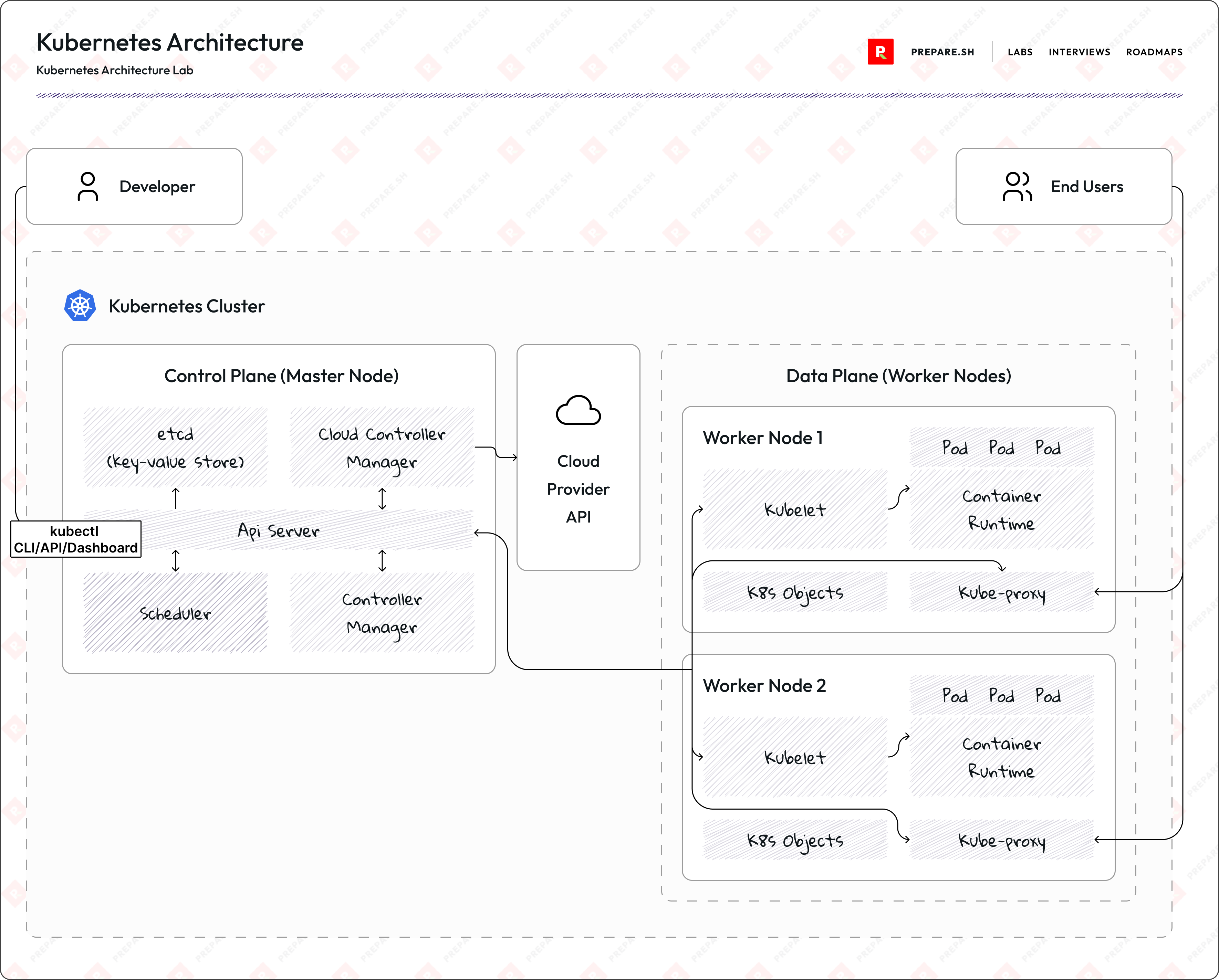
Looking Ahead: CI/CD Integration 🔄
While Kubernetes gives us robust deployment capabilities, in our next lab, we'll automate the entire process with CI/CD (Continuous Integration/Continuous Deployment). This approach creates an automated pipeline that takes code from your repository, builds it, tests it, and deploys it to your Kubernetes environment without manual intervention. This automation eliminates human error in the deployment process and creates a repeatable, reliable path to production. By implementing CI/CD, you'll complete the core feedback loop that enables truly agile software delivery, connecting your development process directly to your operational infrastructure.
 Ubuntu
  Top Contributor